27 DAYS AGO • 4 MIN READ

The case for type B strategy

profile

⚡Sounds Great⚡on Paper

Subscribe below to join the weekly-ish fun....

I am, spiritually and operationally, a Type B podcaster.

Which is to say: my podcast runs on a mostly functional cocktail of vibes, Google Docs, deadline-driven dopamine, and a well-timed email from someone saying, “This episode really helped me,” which I clutch to my chest like a Victorian locket.

Do I check my download numbers? Occasionally, fleetingly, and usually sort of by accident. 🙈

Do I have a dashboard open at all times, tracking day-20 inflection points by episode category, audience acquisition source, and the exact moment someone wandered off to get snacks during a pilot listening session?

I most certainly do not. But you know who does?

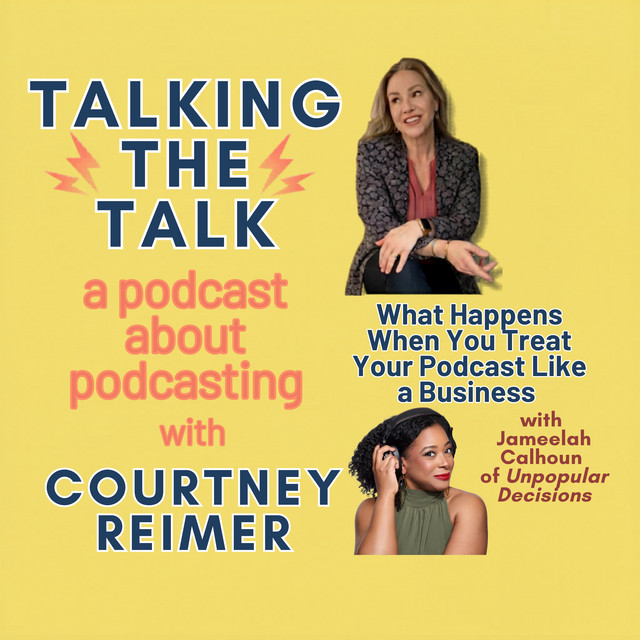
This week’s Talking the Talk guest, Jameelah Calhoun. Jameelah is the host of Unpopular Decisions, a former Audible colleague, and to this day the only person who has ever come to one of my podcast strategy meetings with an elaborate business plan for her show.

A business plan. For a podcast.

Naturally, I was both impressed and mildly alarmed.

In practice, Jameelah and I are very different kinds of builders. We’re both not afraid to own our success, and we both deliberately design for it, but we come at our creations from wildly different angles.

Where I'm a vibe-check-centered strategist, Jameelah is rigorous and vigorous about data-driven decisionmaking. I stan both approaches, but check this out:

Before launching her podcast, Jameelah...

  • conducted audience surveys
  • pinpointed highly specific milestones and multiple monetization paths for her how
  • planned brand extensions
  • created a vision for salons (the intellectual, not hair variety), a newsletter, merch, membership, and a whole ecosystem of support for people making bold moves.

Meanwhile, my podcast runs on :

  • intuition
  • conversations
  • inspiration that arrives inconveniently close to publication day
  • systems I routinely revise to meet me where I am

I know the ebbs and flows of my stamina, energy, and tendency to take on too much, so I intentionally developed systems that support my show when I feel like I can’t.

Because vibes are wonderful. Vibes are where the magic lives. Vibes are how you notice that a conversation feels alive, that an idea has heat, and where someone’s tossed-off compliment about your newsletter means more than a line graph ever could (thank you for that, Ep.1 Talking the Talk guest, Sasha Hamrogue).

But vibes are not a safety net. And sometimes the vibes are off, even for the most chill of podcasts and podcasters.

Because life happens. And, maybe...

  • A guest cancels for an in-studio podcast recording.
  • Spotify boots you off the platform entirely and then subjects you to hours of fruitless customer service chat (thank you for the superhero rescue, LibSyn).
  • An episode file simply will not download from Descript no matter how creative your profanity gets.
  • A shiny new monetization path starts whispering your name when everyone on the internet appears to be making $1.2 million from a Yap Your Way to Wealth challenge.

This is where a thoughtfully planned, North Star strategy becomes less of a cage and more of a buttress.

Sometimes I curse myself for building in strategies that rein me in a bit, or require non-dopamine-triggering activities (see: my poor, neglected podcast tracker Google Sheet).

That’s when I take a deep breath and come back to my “rules of 3,” my stalwart episode templates, and my flywheel systems where the vibes are immaculate.
Build strategies to meet you (& your vibes) where you are:

1. Visualize, articulate, and engineer your big-picture ROI.

You're not just building "a podcast." I know this to be true. But what do you know to be true? Will it become...

A platform? A body of work? A client acquisition engine? A community? A conversation container? A place to test ideas? A trust-building machine?

You probably don’t need a 40-slide business plan, but you do need a “North Star” you can return to when the algorithm threatens to go Hansel & Gretel on you, luring you down a misaligned path with its content-du-jour breadcrumbs.

Write it down, engineer for it in your show, and revisit it when the vibes are off.

2. Track the KPIs that matter.

Downloads are important for the aspiring [INSERT MEGA-CELEBRITY PODCASTER NAME]. Less so for people for whom the podcast is just one part of their larger endeavor (albeit it a powerful and important one).

Non-download Key Performance Indicators to consider tracking:

  • Emails that make you cry a little
  • Episodes people bring up weeks later
  • Guests who become collaborators
  • Topics that create conversations beyond the show
  • The comments and reviews that clearly say: “Wow, you made this show just for me.”

The most meaningful data is often found outside of a metrics dashboard, and can't be quantified in mere graphs on a screen.

3. Design flexible systems before you need them.

If your whole podcast depends on someone else’s calendar, you are one reschedule away from podfade (aka the sudden and untimely death of a podcast).

I will never stop banging my little podcast drum for solo episodes, “voice of the listener” episodes, FAQ episodes, and the sweet relief of a “best of” episode (aka replay) that allows you to spend time away from the mic when you need a break.

Back in my Type A days, I learned the importance of repeatable systems, formats, and processes. Here in my Type B era, I’ve learned the importance of the same, but ones that adapt to your life–not the other way around.

WORKS IN PROGRESS

Plowing through a mountain of submissions for my “podcast editor roll call” as I build up my database for clients and Podcast Launch Accelerator alumnae. Realizing LinkedIn loves a “roll call”-style post (this one saw my highest engagement in weeks). My final “founding cohort” of the Podcast Launch Accelerator–lots of big “seeing is believing” breakthroughs last week. Psyched to be signed up for Jay Clouse’s “Build a Beloved Membership” live cohort. Via a karaoke night organized by Our Third Place, an epiphany about the correlation of my neurodivergence and my love of events where small talk is eschewed for musical-minutiae talk. By popular demand, organizing a podcast “summer sprint” for folks interested in spending the dog days developing a differentiated podcast (limited space available; inquire within)...

Let's close with intention:

May your systems be flexible, your vibes be mostly functional, and your podcast sturdy enough to hold your best ideas.

Looking forward,

Courtney

P.S. Wondering whether a podcast is worth your time? Obviously one of my favorite things to go deep on. Grab time on my calendar and we’ll figure it out together.

⚡Sounds Great⚡on Paper

Subscribe below to join the weekly-ish fun....