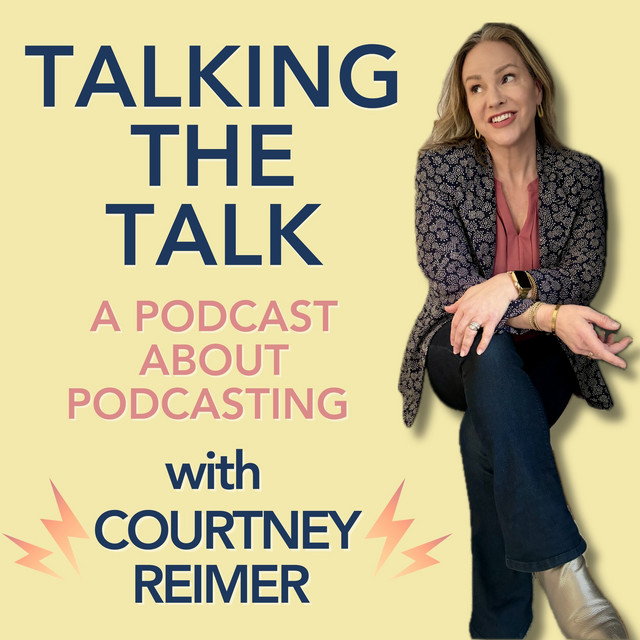
My sudden transition from big-podcast-biz-bred podcast advisor to podcast host/producer/editor has been…a lot. So I’ve given plenty (too much?) airtime to Talking the Talk about how people need to be better prepared for what launching podcast entails. Better prepared than I was, that is. (Do as I say, not as I do; doctor, heal thyself, etc.)
I still stand by that...mostly.
But it dawned on me (probably in those pre-alarm wee hours when I get my best ideas) that somewhere between my podcasting-truther tendencies and the rise of the wildly polished, video-first productions flooding our social feeds (aka The Clippenning), aspiring podcasters have started believing they need to become the founder of a medium-sized media empire before they’re allowed to even think about launching a podcast.
And that’s just…not at all true.
In fact, I have a theory (and some firsthand data) that right now the most effective podcasts–especially for business owners, service providers, and what the monthly jobs report might refer to as “people formerly known as ‘knowledge workers’”– have a lot less in common with a podcast in the traditional sense, and much more in common with something you very likely are already creating on the regular.
All hail the “voice note” podcast.
These bite-sized, low-fi episodes are punching mightily above their weight when it comes to ROI: The gap between the effort of creating a voice-note-style podcast and the amount of trust, value, connection, and client conversion they can generate is honestly kind of bananas.
To be clear: these aren’t those goes-on-forever-and-to-what-end voice notes you get from your bestie–to the point that you’re wondering if she meant it to be a note-to-self voice MEMO instead of comms to a friend.
(No shade to my fellow voice-note maximalists; verbal side quests are hard to resist).
I mean the good kind. The kind of voice note that makes you feel like someone smart is brainstorming with you rather than broadcasting at you from a perfectly lit studio with a perfectly curated bookshelf, and the perfect three-camera setup.
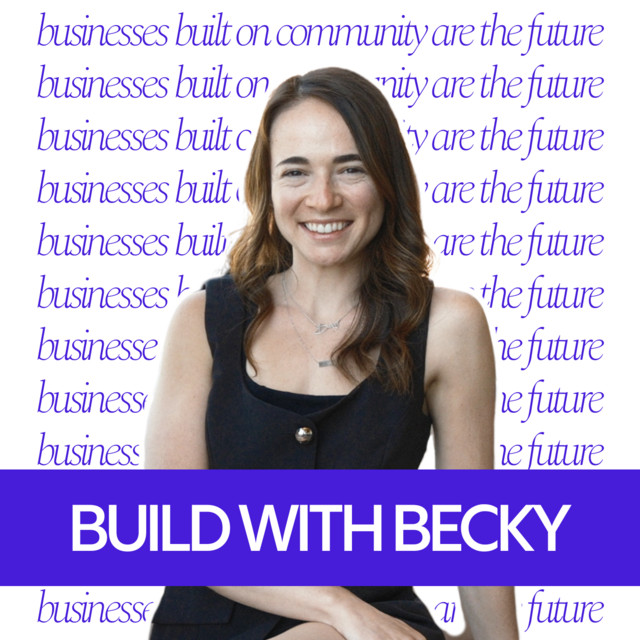
The apotheosis of voice note podcasting (that I’ve encountered so far) is Build With Becky by Becky Pierson Davidson, founder of Affinity Collective. Her episodes are short, lean, insight-dense, and wonderfully unconcerned with polish for polish’s sake. I stan the casual production value and chill approach that fully eschews theme music, taglines, and the sound-design bells and whistles I tend to obsess over for hours at a time.
The vibe is: “Hey, scootch in, here’s something that might help you…” And it WORKS.
Hearing Becky's occasional mouse-clicks in the background of each feels like permission to sit back, relax, and take in the great advice on how to build a community that lasts--and while you're at it, Courtney, maybe loosen up a bit with the absurdly meticulous podcast-editing tendencies (my Audible Studios fam would NEVER).
And the wild part is that her podcast has apparently become Becky’s number one client conversion tool in less than a year. Or perhaps not so wild considering…
I became Becky's client because of her podcast*.
I really and truly hired her to work with me on the next chapter of my Podcast Accelerator community (stay tuned) because these tiny, incredibly useful episodes engendered trust in her abilities. After devouring about six episodes, I declared:
“Well, clearly this woman knows her shit.”
Which, if you think about it, is the whole reason we engage in thought leadership content shenanigans in the first place: to build trust, steadily and solidly. One snackable episode at a time.
Oh, and those oft-quoted "7 touchpoints" a customer needs to make before buying? They happen much more quickly when you're sending voice notes to your ideal clientele on the regular.
*And I got to Becky's podcast via Jay Clouse's Creator Science podcast. More on that when we get into the power of OPP (Other People's Podcasts) for growing your show.